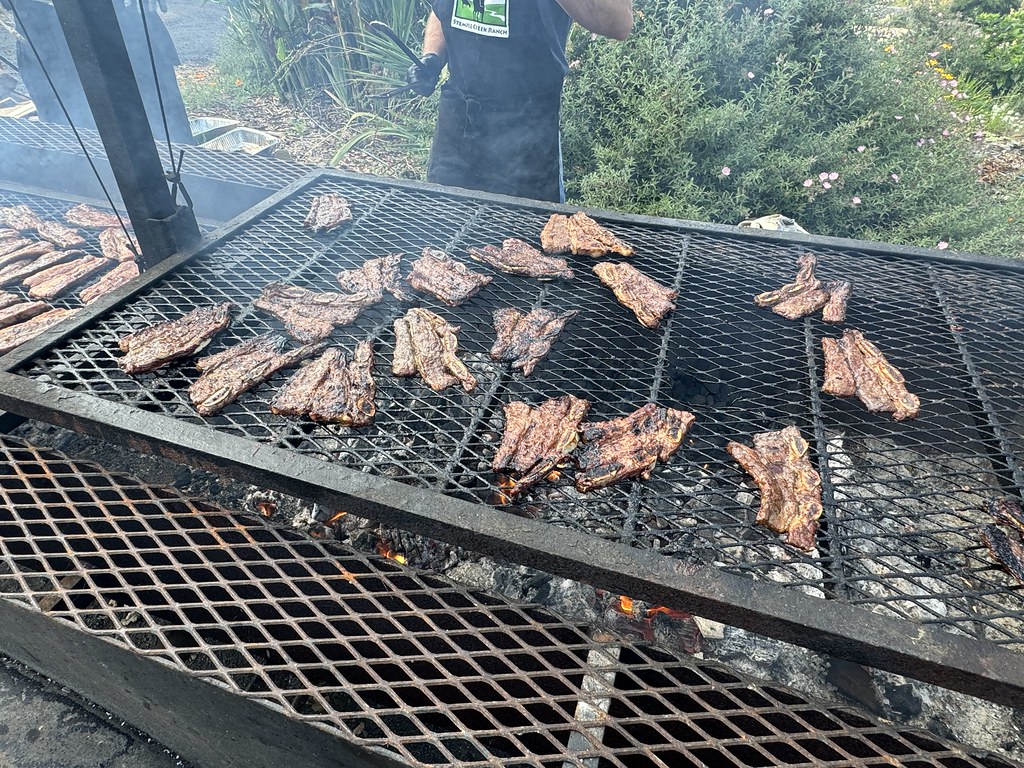
Austin barbecue runs on a simple, unforgiving standard: brisket. Ribs matter, sausage matters, turkey has quietly become one of the best things on most menus — but a Central Texas joint lives or dies on what comes off the point and the flat. Everything else is negotiable.
That standard is why the city has an unusual density of genuinely excellent barbecue and an equally unusual density of places coasting on the reputation of the city itself. Austin's food scene grew fast enough that "Austin BBQ" became a marketing category, and a marketing category attracts operators who bought a rotisserie smoker and a red-checked tablecloth. Knowing the difference before you commit ninety minutes of a Saturday is a genuinely useful skill.
What Central Texas Barbecue Actually Is
The style traces back to the German and Czech meat markets of the 19th century in the towns ringing Austin — Lockhart, Elgin, Taylor, Luling. Butchers smoked the cuts they couldn't sell fresh, served them on butcher paper, and sold them by weight. That lineage still defines the form:
Post oak, indirect heat, offset smoker. Central Texas cooks with post oak because it burns clean and hot with a mild smoke. Hickory and mesquite show up, but post oak is the regional default.
Salt and pepper. The classic rub is coarse black pepper and kosher salt, roughly equal parts. Some pitmasters add a little garlic or cayenne. If the bark tastes like a spice cabinet, you are eating a different regional style — not automatically worse, but not this one.
No sauce required. Sauce exists on most Austin tables, usually thin and vinegar-forward. It is optional by design. A pitmaster who hands you a sauced brisket has made a decision on your behalf that most Central Texas cooks would not.
Sold by the pound, served on butcher paper. The meat-market inheritance. You order by weight, it goes on paper on a tray, and you eat it with white bread, pickles, and onions.
The Brisket Test
Ask for moist (also called fatty, from the point) unless you have a specific reason not to. Lean is the flat, and while an excellent lean slice is a real achievement, moist is more forgiving and shows the cook's work better.
Then check four things before you eat:
The bend. Hold a slice by one end. It should droop and, with a little pull, separate cleanly. If it holds rigid, it's undercooked. If it collapses into shreds under its own weight, it's overcooked or it was sliced too early.
The bark. A properly rendered brisket has a dark, almost black crust that is dry to the touch but not carbonized. It should have texture — you should be able to feel the pepper.
The fat. The fat cap under the bark should be translucent and soft, not white and waxy. Unrendered fat is the single most common flaw in mediocre brisket, and it is the thing most likely to make someone say "I don't really like brisket."
The smoke ring is the pink band just under the bark. It's a chemical reaction, not a flavor, and pitmasters will tell you it proves nothing. They're right. But its absence alongside a pale bark is a reasonable signal that the meat spent more time in a warmer than in smoke.
Reading a Joint From the Parking Lot
Look for the wood. A real offset operation has a stack of split post oak somewhere on the property, seasoning. No wood pile means gas or electric assist, which is not disqualifying but is worth knowing.
Look at the smoke. Thin blue or nearly invisible smoke coming off the stack is what you want. Thick white or gray smoke means the fire is smoldering, and smoldering fire makes acrid meat.
Look at the hours. The best Austin joints open around 11am and close when the meat runs out — often by 1:30 or 2pm on a weekend. "Sold out" is not a gimmick; brisket takes 12 to 16 hours and you cook what you can cook. A barbecue place that serves brisket at 9pm on a Tuesday is holding it a long time.
Look at the line. Lines in Austin are a real signal and also a real cost. A weekday line at 11:15am is a better indicator than a weekend line, because weekend lines contain a lot of people who read the same list you did.
The Beyond-Brisket Menu
Beef ribs are the showpiece — a single enormous plate rib that's essentially brisket-flavored and served bone-in. They're expensive, they sell out first, and at a good joint they're worth it.
Sausage is the most direct link to the meat-market origins. House-made links, coarse-ground, with a snap to the casing. If a joint buys its sausage in, that's a reasonable business decision, but house-made is the tell of a serious kitchen.
Turkey has gone from afterthought to genuine highlight over the last decade. Smoked turkey breast is easy to ruin and revelatory when it's done right — moist, peppery, with a clean smoke.
Pork ribs in Central Texas are usually spare ribs, dry-rubbed, with a slight tug rather than fall-off-the-bone. If they fall off the bone, they were probably braised or steamed at some point.
Sides used to be an afterthought here and increasingly aren't. Potato salad, pinto beans, and coleslaw are the traditional three. The newer generation of Austin joints does more ambitious things with them, and the results are often excellent.
Where the Joints Cluster
East Austin has the highest concentration of the modern generation of barbecue — places that opened in the last fifteen years and treat the craft as a discipline rather than an inheritance. Expect lines, expect limited hours, expect it to be worth it.
South Austin and South Congress mix long-standing neighborhood joints with newer operations serving a heavy tourist and festival crowd. Quality varies more here than anywhere else in the city, and proximity to a hotel is not a quality signal.
North Austin and the suburbs — Round Rock, Pflugerville, Cedar Park — have a growing set of joints serving people who don't want to drive downtown and stand in a line. Some of them are very good, and they're substantially easier to get into.
The barbecue belt outside town is the day trip. Lockhart, Taylor, Elgin, and Luling are 30 to 60 minutes out and hold the oldest continuously operating meat markets in the style. If you're serious about this, at least one of these trips is mandatory. Go on a weekday, go early, bring cash for the places that still prefer it.
Trailers and pop-ups are where Austin's next generation of pitmasters is currently working. Hours are erratic, locations move, and social media is often the only reliable schedule. This is also where you'll find the most interesting cooking in the city right now.
Practical Notes
Bring cash or check the payment situation in advance — a few of the oldest places still run cash-only. Go early; "we open at 11" means the line starts at 9:30 at the most popular spots. Order more than you think you need if you're with a group, because you can't come back for a second round after they sell out. And if the person cutting your brisket asks whether you want moist or lean, say moist.
Looking for barbecue near you in Austin? Browse our directory of local BBQ joints and restaurants with addresses, hours, and directions.